Che cos'è l'autonomia WLTP e cosa significa per la tua guida quotidiana?
Venerdì 24 luglio 2026
Hai notato un veicolo elettrico con un'autonomia impressionante sulla scheda tecnica. Ma una volta al volante, il numero sul cruscotto racconta una storia diversa.
Pubblicato da GACHai notato un veicolo elettrico con un'autonomia impressionante sulla scheda tecnica. Ma una volta al volante, il numero sul cruscotto racconta una storia diversa. Sound familiar? Many drivers across Europe ask the same question: can you actually trust those advertised figures? To judge them fairly, you first need to understand what the WLTP range is. This official standard helps buyers compare different cars honestly. Let us explore what this testing means and how it applies to your everyday journeys.
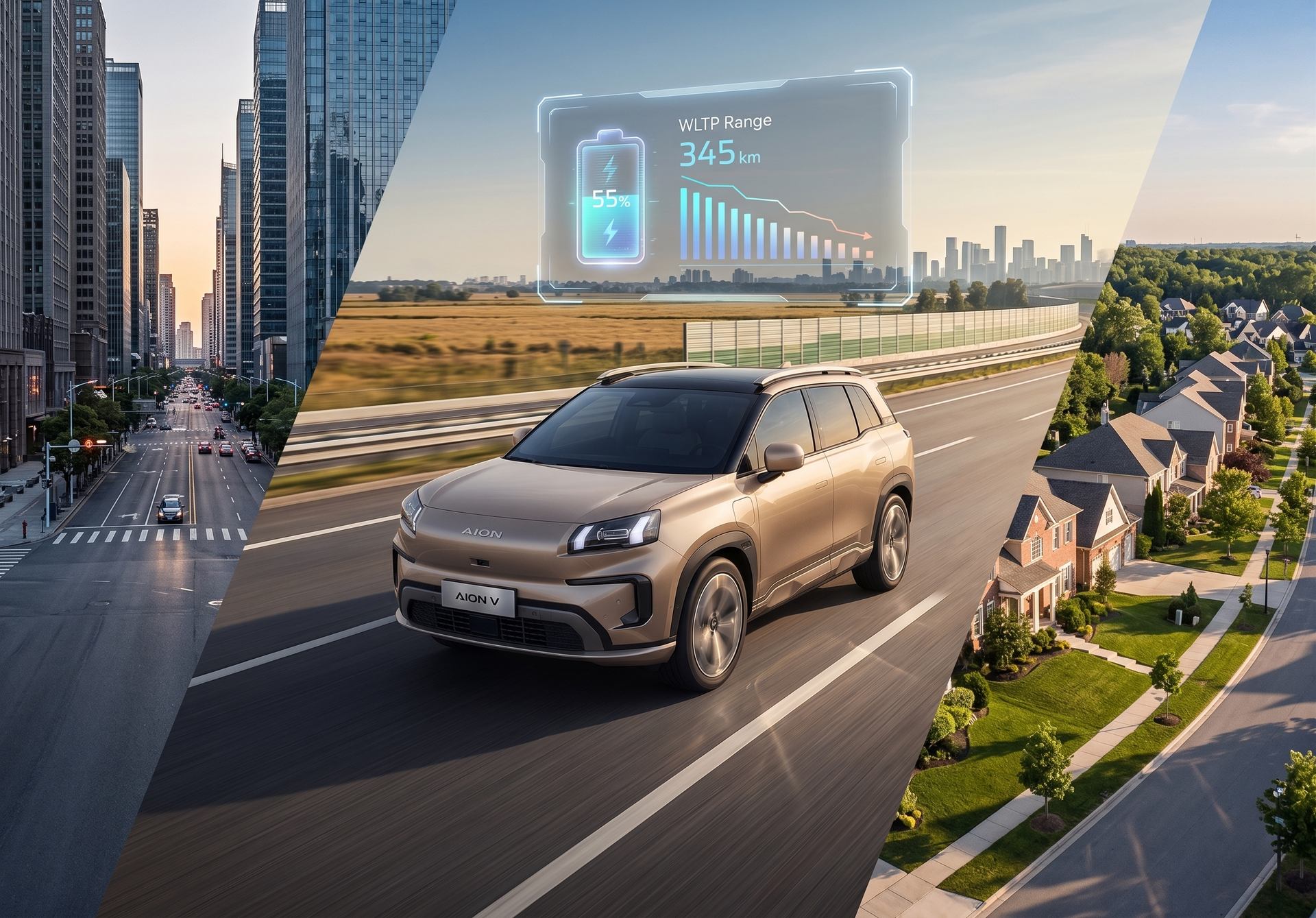
What Does WLTP Mean?
WLTP stands for Worldwide Harmonised Light Vehicle Test Procedure. It is the official, standardised method used to measure the fuel consumption, CO₂ emissions, and electric driving range of new vehicles.
In Europe, WLTP figures are the legally required published range reference for all new cars — including EVs. Every manufacturer must test their vehicles using this method before selling them in the European market. Since September 2018, all new passenger cars registered in the EU must comply with WLTP standards.[1]
This matters because it creates a level playing field. When comparing two EVs, you know both figures were produced under the same conditions. That makes the WLTP range a reliable starting point — even if it doesn't tell the whole story.
How WLTP Testing Works
Understanding what the WLTP range is also means understanding how the test is actually run.
The vehicle sits on a dynamometer — a machine that lets the wheels spin while the car stays stationary. The lab environment is controlled, with a set temperature of 23°C, which is considered optimal for electric vehicle battery performance.[2]
Il test segue un ciclo di guida predefinito denominato WLTC. Questo ciclo è suddiviso in quattro fasi distinte, ognuna delle quali simula una diversa velocità di guida:
- Fase bassa— guida urbana, con frequenti fermate e ripartenze, fino a 56,5 km/h
- Fase intermedia— strade suburbane a velocità moderata
- Fase alta— guida su strada più veloce
- Fase extra-alta— velocità da autostrada
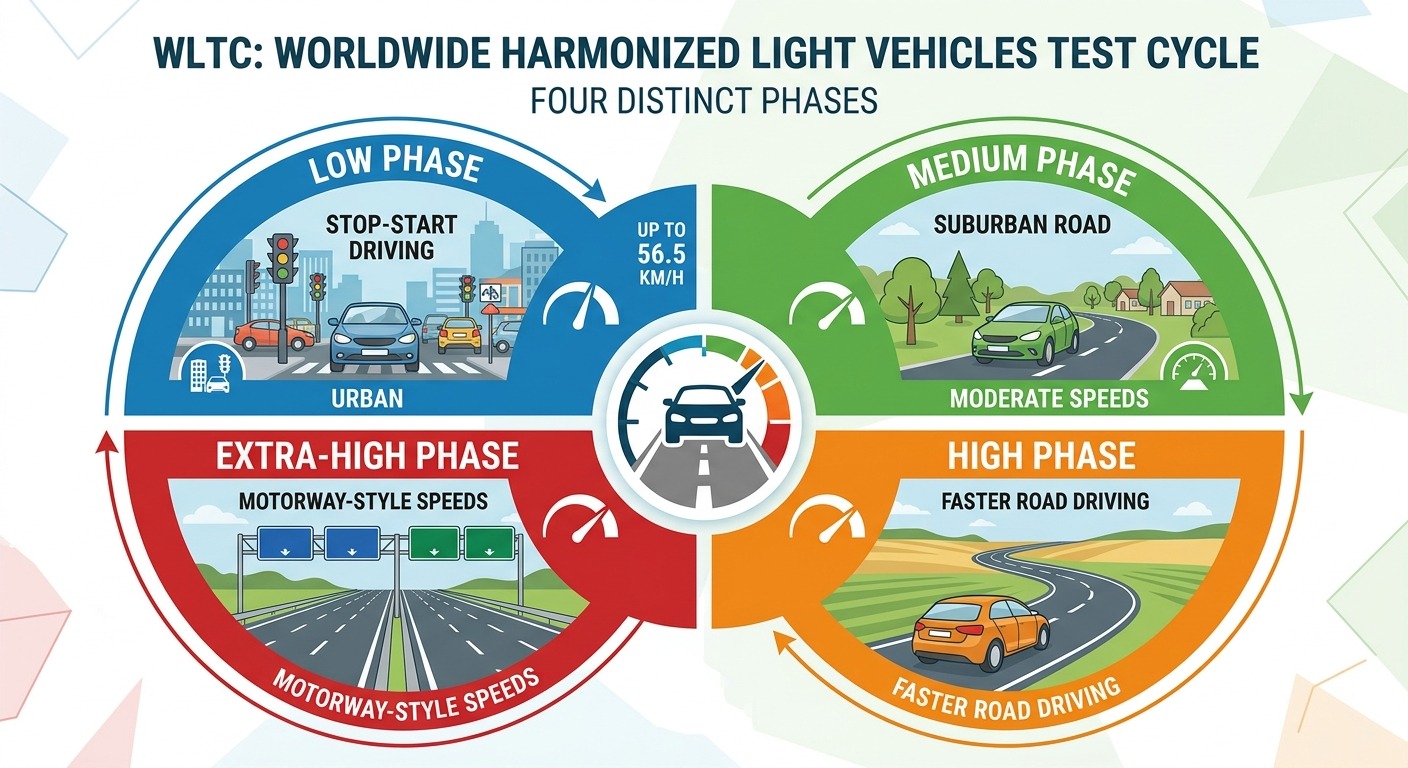
The entire test runs for 30 minutes and covers approximately 23 km. Each phase is weighted and averaged to produce a single combined range figure. Because the cycle is identical for every vehicle tested, the results are repeatable, consistent, and comparable across different models and brands.
The WLTP also accounts for a vehicle's equipment levels. Options like larger wheels or panoramic roofs can affect energy consumption, so manufacturers must test configurations that reflect real-world spec choices.
Why WLTP Range Differs from Real Life
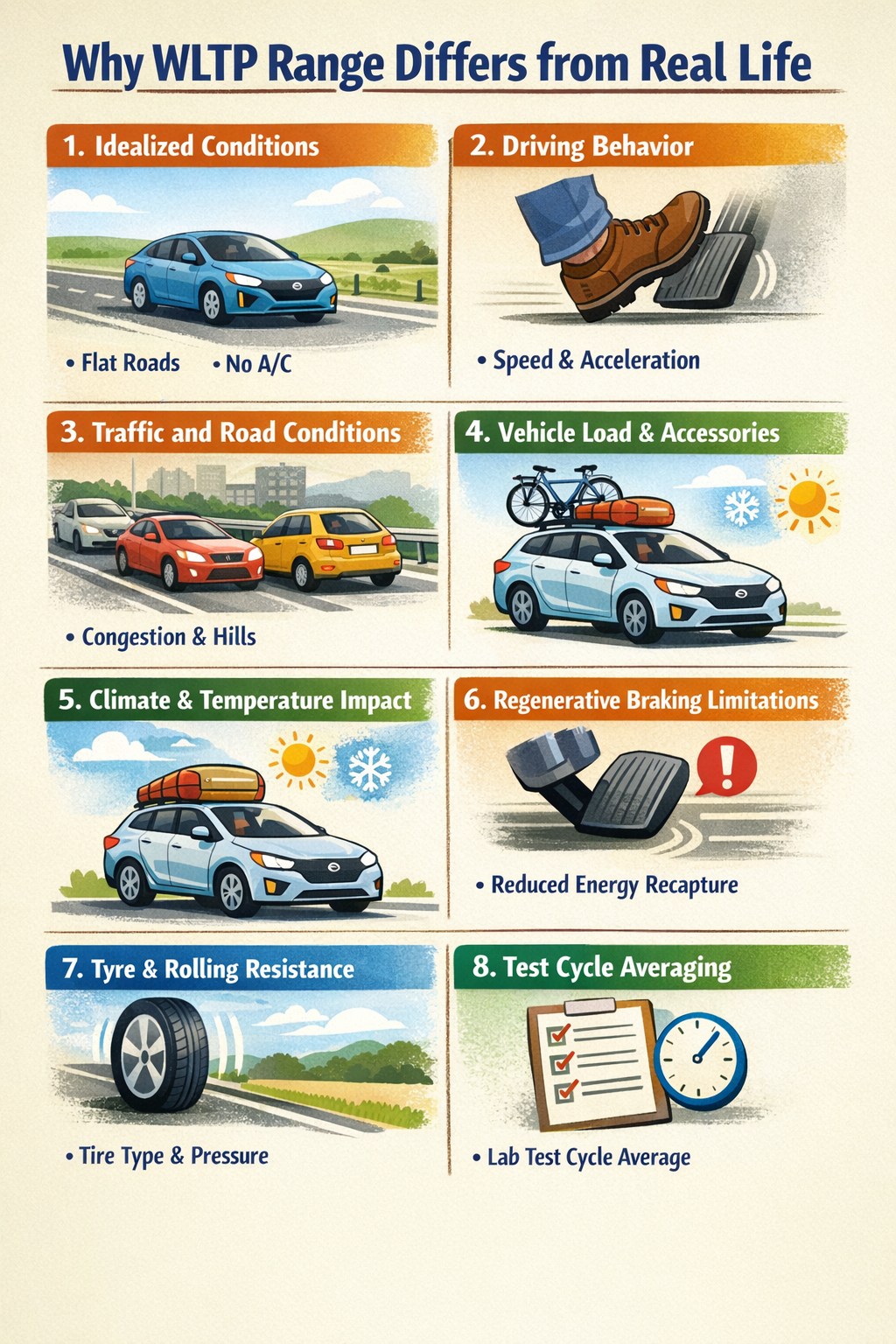
So you now understand what the WLTP range is. But why does the figure sometimes feel out of reach on real roads? Here are the main reasons.
1. Condizioni idealizzate
Il test si svolge in laboratorio a una temperatura fissa di 23 °C. Le strade europee reali non sono laboratori. Le temperature variano drasticamente tra le stagioni e, di conseguenza, anche le prestazioni della batteria.
2. Comportamento di guida
The WLTP cycle follows a scripted speed profile. Spirited acceleration, late braking, or simply driving with urgency will drain energy faster than the test assumes.
3. Traffico e condizioni stradali
Il traffico autostradale a singhiozzo, le rotatorie e la congestione urbana modificano il fabbisogno energetico in modi che un ciclo di prova fisso non può cogliere appieno.
4. Carico del veicolo e accessori
Il test viene eseguito senza passeggeri né carico. Aggiungendo una famiglia di quattro persone, bagagli e un portapacchi sul tetto, l'energia necessaria per muovere l'auto aumenta sensibilmente.
5. Impatto del clima e della temperatura
Cold weather is one of the biggest range reducers for EVs. At 0°C to -10°C, studies have found real-world EV range can drop by 10–23% compared to the WLTP figure. Air conditioning and heating are also not used during the WLTP test — but you will certainly use them.
6. Limitazioni della frenata rigenerativa
WLTP testing includes regenerative braking, but the benefit in real life depends heavily on your driving style and route profile. On a long motorway run with minimal braking, regen contributes very little.
7. Differenze tra pneumatici e resistenza al rotolamento
Il test utilizza configurazioni di pneumatici specifiche. Pneumatici invernali, gomma usurata o pressioni di gonfiaggio diverse aumentano la resistenza al rotolamento e riducono l'autonomia.
8. Media del ciclo di prova
The four phases are blended into a single combined figure. If your daily drive skews heavily toward motorway speeds — where energy demand is highest — your real-world figure will sit noticeably below the WLTP combined range.
The good news: research suggests WLTP is around 10% optimistic on average, a far more honest result than the old NEDC standard, which could overestimate by 25–30%.
Come massimizzare l'autonomia reale del tuo veicolo elettrico
Knowing the gap between WLTP and real-world performance empowers you to close it. Here are the most effective strategies, summarised clearly:
Category Key Actions Impact abitudini di guida Accelerate smoothly, anticipate stops, maintain steady speeds High (recover 10–15% of range) Controllo climatico Pre-condition cabin while plugged in; use seat heating over cabin heating High (especially in winter) Velocità e resistenza Keep motorway speeds below 110 km/h; remove roof racks when not in use High (aerodynamic drag rises sharply at speed) Gestione pneumatici Keep tyres at recommended pressure; use low-rolling-resistance tyres in summer Medium Pianificazione del percorso Use the in-car navigation for energy-optimised routing; plan charges in advance Medium Frenata rigenerativa Use the highest regen setting available; coast early before stops MediumPiccole modifiche in ogni categoria si sommano. I conducenti consapevoli delle proprie abitudini di guida in genere dichiarano un'autonomia reale dei veicoli elettrici molto più vicina al valore WLTP rispetto a coloro che guidano senza apportare modifiche.
AION V: progettato per la tua vita quotidiana.
If you are looking for long range, the AION V offers a WLTP range of up to 510 km — making it one of the most capable long-range electric SUVs in its class.
Ma cosa significa concretamente questa cifra per la tua vita?
- Pendolarismo quotidiano— the average European commuter travels around 30–50 km per day. A full charge in the AION V comfortably covers a week of commuting without needing a top-up.
- Accompagnare la scuola e fare commissioni— I viaggi brevi e ripetuti sono spesso il momento in cui si insinua l'ansia da autonomia. Grazie all'autonomia dell'AION V, anche una giornata intensa tra accompagnamento dei figli a scuola, spesa al supermercato e attività extrascolastiche incide minimamente sulla batteria.
- Gite del fine settimana— La distanza tra Parigi e Bruxelles è di circa 300 km. Da Monaco a Vienna è di circa 430 km. L'AION V affronta entrambi i viaggi comodamente con una singola ricarica in condizioni favorevoli, con un'autonomia di riserva considerevole.
- Guida in un contesto misto urbano-suburbano— this is where the AION V truly shines. Stop-start city driving activates regenerative braking, helping recover energy continuously. The transition to suburban roads then allows efficient cruising. The result is a WLTP range that translates well into everyday mixed use.
La AION V è inoltre dotata di una pompa di calore integrata all'avanguardia nel settore, che riduce significativamente i costi energetici per il riscaldamento dell'abitacolo durante i rigidi inverni europei, uno dei principali fattori che incidono negativamente sull'autonomia reale, affrontato direttamente a livello ingegneristico.

FAQ
1. What is the difference between WLTP and NEDC?
Il ciclo NEDC era un vecchio standard di prova creato negli anni '80. Era molto breve, molto lento e altamente teorico. Il nuovo standard è molto più lungo e veloce. Include accelerazioni più realistiche e velocità massime più elevate. Pertanto, i nuovi valori sono molto più vicini alla realtà.
2. Is WLTP useful if it is not the exact real-world number?
Absolutely. The WLTP range is not meant to be a guarantee of what you will see on every drive. Its purpose is to give you a consistent, comparable benchmark. Because every manufacturer uses the same procedure, you can reliably compare the AION V's range against any other EV on the market — and trust that the comparison is fair.
Consideratelo un punto di riferimento standardizzato, non una promessa. Abbinatelo alla comprensione di come le vostre abitudini di guida e il clima influenzino l'autonomia e avrete a disposizione uno strumento davvero utile per prendere una decisione d'acquisto consapevole.
3. Why do two EVs with similar battery sizes have different WLTP ranges?
Battery capacity is only part of the equation. The WLTP range is calculated by dividing usable battery energy by the vehicle's energy consumption rate.[3] That consumption rate is shaped by many factors: aerodynamic efficiency (the drag coefficient), vehicle weight, powertrain efficiency, tyre rolling resistance, and thermal management quality.
Un veicolo elettrico con una carrozzeria più elegante, un motore più efficiente e una pompa di calore meglio progettata può raggiungere un'autonomia significativamente maggiore con la stessa batteria rispetto a un concorrente più pesante e meno aerodinamico.
Inizia il tuo viaggio elettrico
In sintesi, i test di laboratorio standard forniscono uno strumento affidabile per confrontare i veicoli elettrici. Mostrano il vero potenziale della batteria in condizioni altamente controllate. Noi di GAC Europe progettiamo le nostre auto per trasformare quei dati impressionanti sulla carta in prestazioni affidabili nell'uso quotidiano. Il modo migliore per sperimentare questa efficienza è mettersi al volante di persona.
Sei pronto a scoprire cosa può fare AION V per i tuoi spostamenti quotidiani, i tuoi weekend e tutto il resto?
Prenota oggi stesso un test drive →
Riferimenti
[1] Octopus EV. What is WLTP and how does it work? https://octopusev.com/ev-hub/what-is-WLTP-how-does-it-work
[2] Gridserve. What is WLTP range and is it different to real-world EV range? https://www.gridserve.com/what-is-WLTP-and-how-does-it-impact-the-real-world-range-of-my-electric-car/
[3] EVDB.nz. WLTP Explained — Range Calculation. https://evdb.nz/WLTP
Altre notizie
- GAC accelera l'espansione europea grazie al successo di AION UT e AION V alla Settimana del Design di Milano.
- GAC Milan Design Centre: plasmare la mobilità del futuro attraverso il design globale.
- La tecnologia delle batterie per veicoli elettrici spiegata: l'energia per il futuro del trasporto pulito.
- GAC European inaugura il primo centro di distribuzione europeo di ricambi, ridefinendo le capacità di assistenza localizzata.
- GAC AION ha ottenuto una valutazione di sicurezza a cinque stelle da Euro NCAP, rafforzando il suo impegno globale per la sicurezza automobilistica.
- GAC accelera il piano per il mercato europeo, stringendo una partnership con Magna per intensificare la cooperazione a livello locale.
- GAC ospiterà a Milano la prima europea di AION UT.
- A Milano è stato lanciato l'evento di test drive per la stampa della AION UT!
- Veicoli elettrici nell'UE: la soluzione migliore per far fronte all'aumento del prezzo del petrolio.
- AION UT conquista il Torino Automotive Design Award 2026